Illinois Window Tint Laws: What's Legal, What's Not & Why Professional Installation Matters
You finally decided to tint your windows. Smart move. Window tint blocks heat, cuts glare, adds privacy, and gives your car a clean, finished look. But before you pull into any shop, there’s one thing every Illinois driver needs to know: tint laws are strict, and getting them wrong can cost you.
At Aesthetic Styling in Naperville, we get questions about Illinois tint laws constantly. This guide breaks down exactly what’s legal, what’s not, and why having a professional install your tint is the difference between compliance and a fix-it ticket.
Illinois Window Tint Laws: The Basics
Illinois law regulates how dark and how reflective your window tint can be. The rules differ depending on which window you’re tinting — and whether your vehicle is a passenger car or an SUV/van.
For Passenger Vehicles (Sedans, Coupes, Sports Cars)
- Windshield: Non-reflective tint is allowed only on the top 6 inches (the “visor strip”). No tint below that — period.
- Front side windows: Must allow more than 35% of light in (35% VLT minimum).
- Back side windows: Must allow more than 35% of light in.
- Rear window: Must allow more than 35% of light in.
For SUVs, Vans & Multipurpose Vehicles
- Windshield: Same rule — non-reflective tint on the top 6 inches only.
- Front side windows: Must allow more than 50% of light in.
- Back side windows: Any darkness level is allowed.
- Rear window: Any darkness level is allowed.
Reflectivity Rules (Both Vehicle Types)
Illinois also limits how reflective your tint can be. Both front and rear side windows must not be more than 35% reflective. Highly mirrored or metallic tints that exceed this are illegal regardless of how dark they are.
What Does VLT Mean?
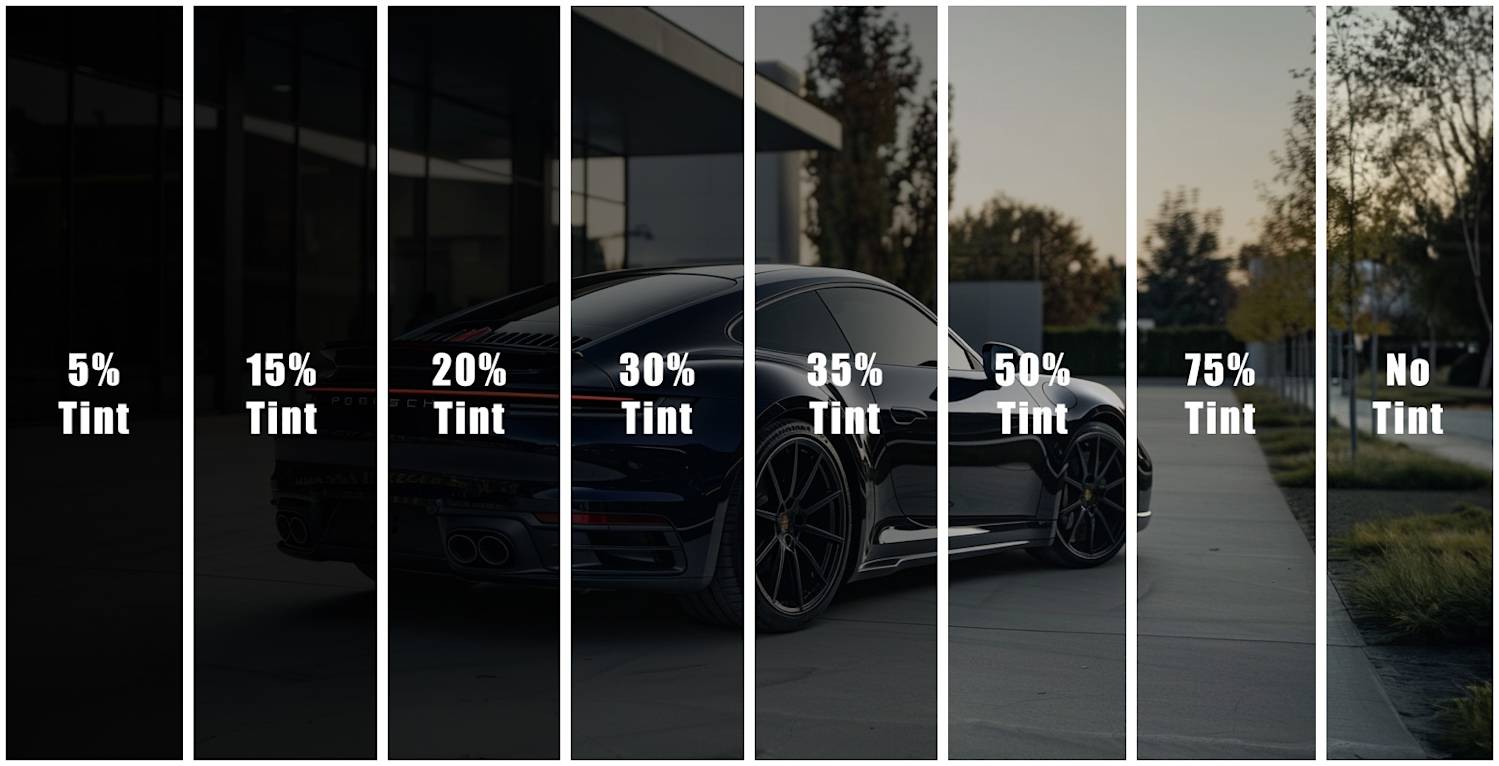
VLT stands for Visible Light Transmission — the percentage of visible light that passes through your window. The lower the number, the darker the tint.
- 50% VLT — Lightly tinted, barely noticeable
- 35% VLT — The Illinois legal minimum for most windows; noticeably dark
- 20% VLT — Very dark; illegal on Illinois front windows
- 5% VLT (“limo tint”) — Extremely dark; illegal for most Illinois applications
It’s also important to note that Illinois law measures the combined VLT of the film AND the factory glass. Some factory glass already blocks 10–20% of light, meaning the tint film you add needs to be calculated on top of that — not tested alone. This is another reason professional installation matters.
What Happens If Your Tint Is Illegal?
Illinois law enforcement can pull you over specifically for illegal window tint. If your windows don’t pass, you’ll typically receive a fix-it ticket (equipment violation) requiring you to remove or replace the tint within a set timeframe. Repeat violations or failure to fix the issue can lead to escalating fines.
Beyond fines, illegal tint can also cause issues during your vehicle’s emissions or safety inspection, and in some cases may affect insurance claims if an accident occurs.
Common Tint Mistakes Illinois Drivers Make
We see the same mistakes over and over. Here’s what to avoid:
- Going too dark on front windows. Many drivers want the darkest tint possible, not realizing Illinois law requires 35% VLT on front side windows. Anything darker is illegal — no exceptions.
- Ignoring factory glass VLT. Your car’s glass already has a tint level. If your factory glass is already at 80% VLT and you add a 35% film, your combined VLT drops to around 28% — below legal limits. A professional measures and accounts for this.
- Buying tint online without knowing the actual VLT. Many cheap kits advertise “dark tint” without specifying the VLT percentage. You have no way to verify compliance.
- Applying tint to the windshield below the visor strip. This is illegal in Illinois and a serious safety hazard. No shop should do this.
- Using highly reflective or mirrored films. These look sharp but often exceed Illinois’s 35% reflectivity limit.
Why Professional Installation Matters for Compliance
Illinois doesn’t require a tint certificate or sticker (unlike some states), but that doesn’t mean compliance is optional. At Aesthetic Styling, every window tint installation is done with compliance in mind from the start:
- We measure your factory glass VLT before recommending any film, so the combined VLT always meets Illinois standards.
- We use professional-grade films with certified VLT ratings — not off-brand rolls where the darkness varies by batch.
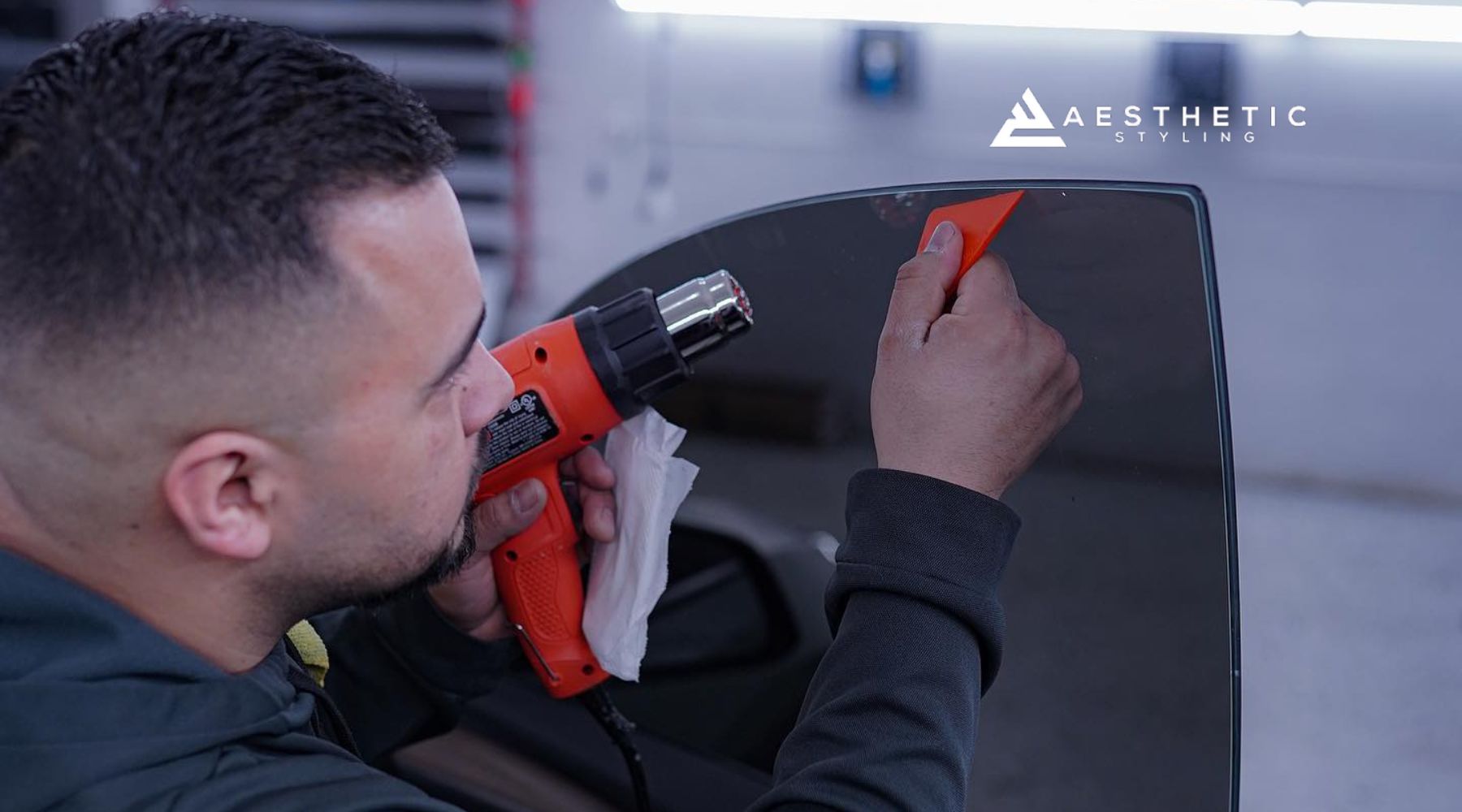
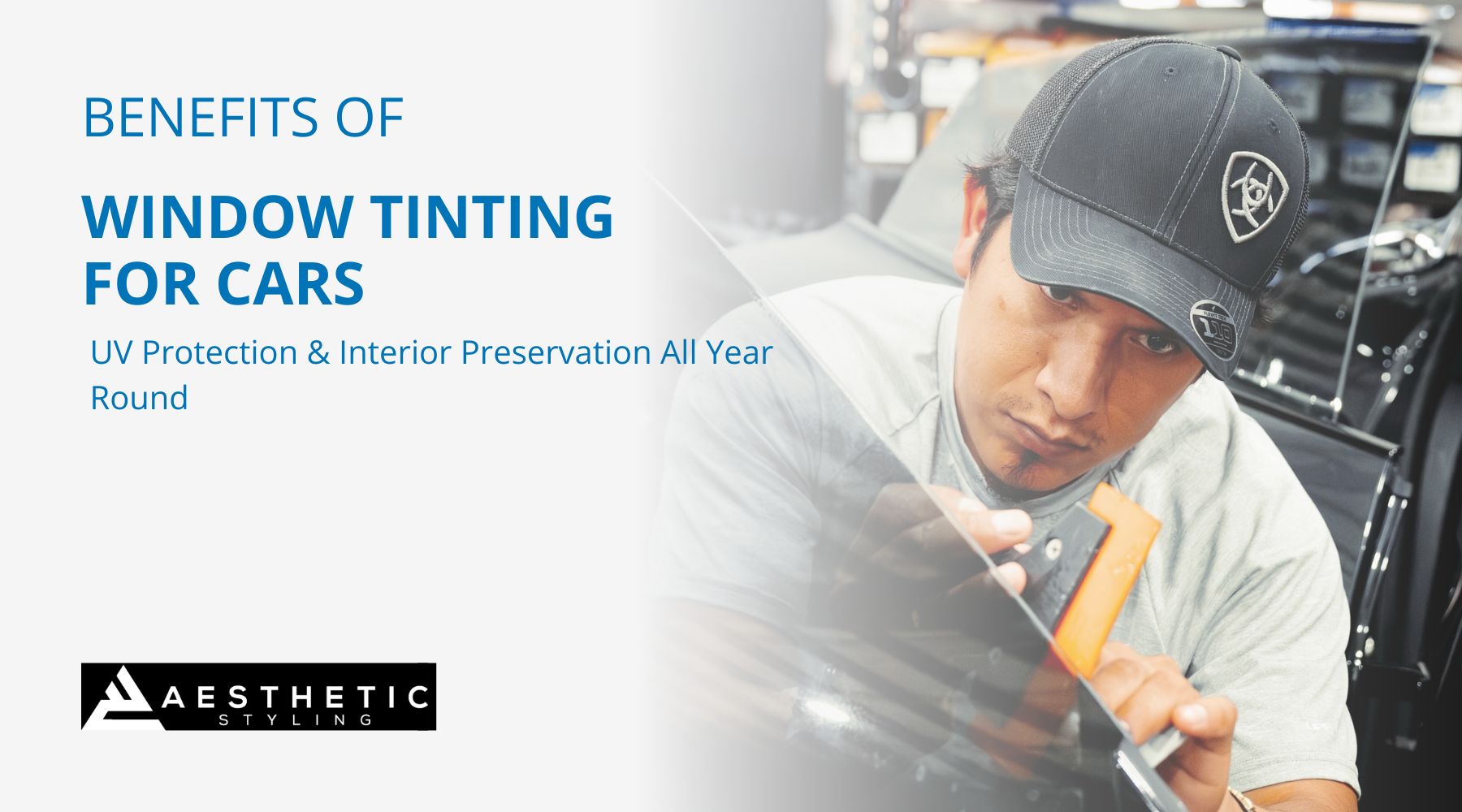
- We apply tint cleanly and precisely, without bubbles, peeling edges, or gaps that degrade performance and look unprofessional.
- We help you choose the right film for your goals — whether that’s maximum heat rejection, UV protection, glare reduction, or a specific look — while staying fully within the law.
Choosing the Right Tint: Beyond Just the Law
Once you know what’s legal, the next step is picking the right type of film. Not all tints are equal — even at the same VLT percentage, film quality dramatically affects performance:
- Dyed film: Most affordable, decent UV blocking, fades over time.
- Carbon film: Better heat rejection, no fading, matte finish.
- Ceramic film: Top tier. Blocks up to 99% of UV rays and significantly more heat than dyed or carbon — without interfering with GPS, phone signals, or radar.
For Chicagoland drivers dealing with brutal summers and intense sun glare while driving west at sunset on I-88, ceramic tint is often the best investment for comfort and protection.
Ready to Tint? Here's the Next Step
If you’re in Naperville or the surrounding area and want window tint that looks great, performs well, and keeps you legal — Aesthetic Styling has you covered.
We’ll walk you through your options, measure your factory glass, and install your tint with the precision and care your vehicle deserves. No guesswork, no compliance headaches, no bubbles.
Call us at (630) 614-1515 or visit us online to book your free consultation.